
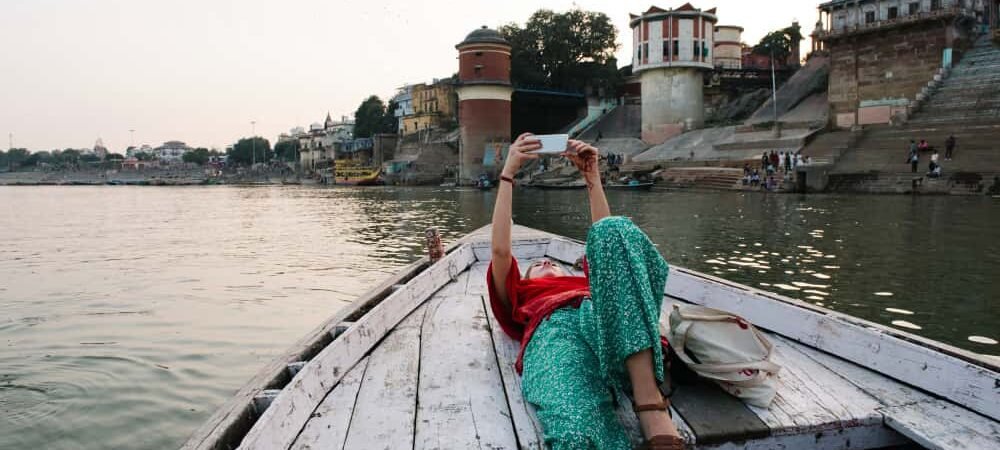
Explore Varanasi (Kashi/Banaras)— Kashi Vishwanath Temple, Kaal Bhairav Temple, Manikarnika Ghat, Ganga Aarti at Dashashwamedh Ghat, major ghats, the tradition of sages, BHU, Damru Stadium, and iconic corners for Banarasi cuisine.
Varanasi: Where Time Doesn’t Just Pass, It Becomes a Spiritual Practice
India is home to many ancient cities, but the experience offered by Varanasi is truly unique. Call it Kashi, Banaras, or Varanasi—the names differ, but the “SOUL” remains the same. Situated along the banks of the Ganges, this city is a confluence of temples, ghats, narrow lanes, music, literature, philosophy, spiritual practice, and culinary delights—a place where life and death are visible in a single frame.
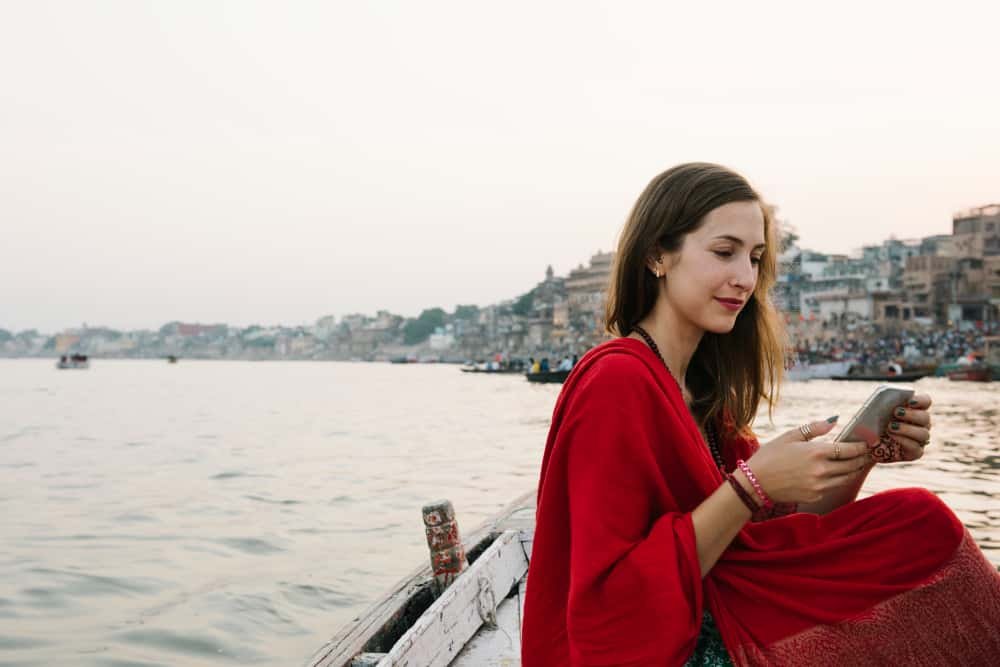
The rising sun over the Ganges at dawn, the skyline of temples viewed from a boat, the sound of conch shells and Vedic chants, the wisdom of sages, and the evening Ganga Aarti at Dashashwamedh Ghat—where the river glows with countless lamps—this is the essence of Kashi. According to the Government of India’s tourism portal, Varanasi is counted among the world’s oldest living cities, with an identity deeply rooted in spirituality, ghats, temples, music, art, and craftsmanship.
Reports indicating the arrival of over 72.6 million (7.26 crore) tourists and pilgrims in Varanasi in 2025 demonstrate that Kashi’s popularity extends far beyond just religious travelers; It has become a major attraction for travelers from within the country and abroad, culture enthusiasts, and spiritual seekers alike.
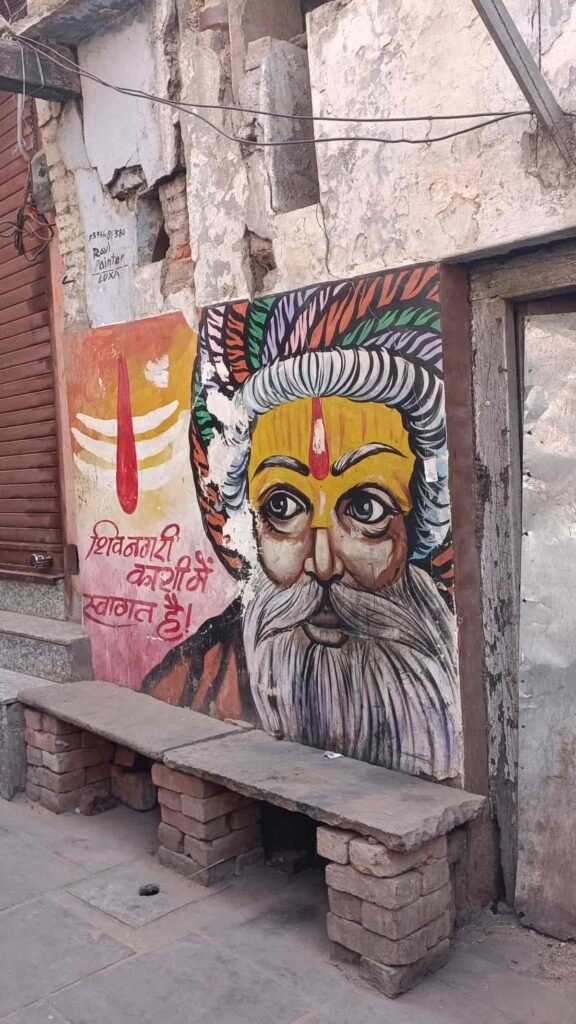
Kashi Vishwanath Temple: The Spiritual Axis of Kashi

A visit to Varanasi is never considered complete without paying obeisance at the Kashi Vishwanath Temple. Dedicated to Lord Shiva, this temple is one of the twelve Jyotirlingas. Here, Lord Shiva is known as Vishwanath or Vishweshwar—meaning the Lord of the entire universe.
The Kashi Vishwanath Temple is not merely a place of worship but the epicenter of Kashi’s religious consciousness. The Kashi Vishwanath Dham, developed between the temple and the Ganga, has made the journey from the temple to the river ghats much more convenient for devotees. As you walk through the street surrounding the temple, you will encounter shops selling flower garlands, puja (worship) materials, prasad (sacred offerings), Banarasi Sarees, sweets, and small eateries. This is where the worlds of pilgrimage and everyday Banarasi life seem to blend seamlessly.
Kaal Bhairav Temple: The Court of Kashi’s ‘Kotwal’
Alongside the worship of Lord Shiva, the Kaal Bhairav Temple holds immense significance in Kashi. According to religious belief, Kaal Bhairav is regarded as the Kotwal (Guardian/Chief of Police) of Kashi.
The experience of visiting the Kaal Bhairav Temple is distinct from that of other temples in Kashi. The atmosphere here is a unique blend of devotion and the solemnity associated with Bhairav Sadhana (spiritual practice dedicated to Bhairav).
Many devotees consider visiting Kaal Bhairav and Goddess Annapurna, alongside Kashi Vishwanath, an essential part of their pilgrimage to Kashi.
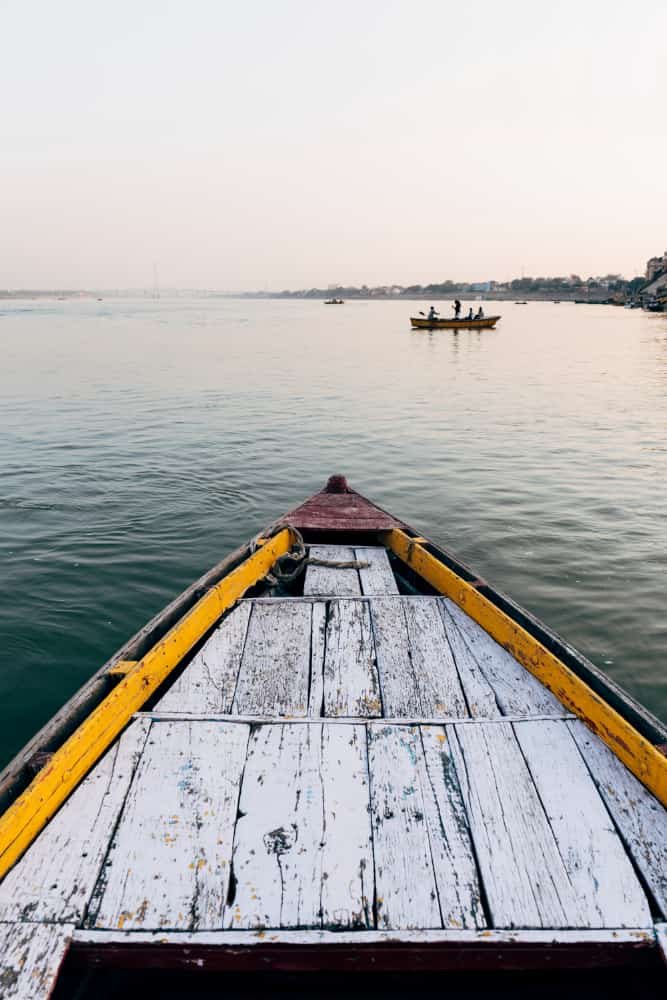
Ganga Aarti at Dashashwamedh Ghat: When the Ganges Comes Alive with Lamps
If there is one image of Kashi that is most widely recognized across the globe, it is the Ganga Aarti at Dashashwamedh Ghat.
Held after sunset, the Aarti—accompanied by the ringing of bells, the blowing of conch shells, the chanting of mantras, the fragrance of incense, and the use of massive brass lamps—is a truly magnificent spiritual experience. The evening Aarti at Dashashwamedh Ghat lasts for approximately 45 minutes and involves the worship of the River Ganges in accordance with Vedic traditions.
Devotees seated on the ghat’s steps, tourists standing in boats, small burning lamps held in hands, and the golden light falling upon the Ganges—this scene is not merely something to be seen, but an experience to be felt.
Note: Crowds can swell significantly depending on the day and the season. It is advisable to arrive at the ghat well in advance.
Manikarnika Ghat: A Philosophy of Life, Death, and Salvation
To understand Kashi, one must understand Manikarnika Ghat.
It is one of the primary cremation ghats in Varanasi and is considered extremely sacred in Hindu tradition. Here, the fires of cremation can be seen burning day and night. This sight should be viewed not as a tourist attraction, but as a deeply sensitive religious tradition.
Manikarnika embodies the philosophy of Kashi, wherein birth and death are not separate events but parts of the same cycle of life. For this reason, the spirituality of Kashi is not limited to temples and worship; here, even death becomes a subject of philosophical contemplation. Saints and people believe Manikarnika as a significant ghat in Kashi, linked to reflections on life, death, and liberation.
Note: When taking photographs or videos of the cremation rituals here, one must fully respect local religious sentiments and the privacy of the families involved.
Prominent Ghats of Kashi and Their Associated Saintly Traditions
The ghats of Varanasi are not merely steps leading down to the river; each ghat possesses its own unique story, tradition, and cultural identity. There are said to be approximately 88 ghats in the city, and the majority of them are associated with religious bathing and rituals.
1. Assi Ghat — The Beginning of ‘Subah-e-Banaras’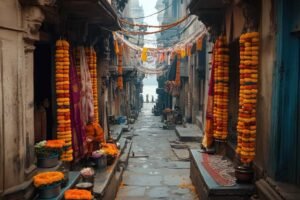
Situated at the confluence of the Ganges and Assi rivers, Assi Ghat is one of Kashi’s most popular ghats. Here, the ‘Subah-e-Banaras’ (Morning of Banaras) karyakram creates an atmosphere filled with yoga, music, mantras, and prayers at dawn.
The area around Assi also reflects a vibrant mix of literature, music, café culture, and the energy of young travelers.
2. Tulsi Ghat — In Memory of Goswami Tulsidas
Tulsi Ghat is named after the great saint-poet Goswami Tulsidas. The presence of Tulsidas in Kashi and the tradition of devotion to Lord Rama (Rambhakti) have bestowed a distinct religious and cultural identity upon this area.
The Tulsi Manas Mandir is another major site associated with the legacy of Tulsidas and the Ramcharitmanas.
3. Dashashwamedh Ghat — The Hub of Ganga Aarti
This is one of Kashi’s most famous ghats, renowned globally for the Ganga Aarti performed here every evening.
4. Manikarnika Ghat — A Symbol of Cremation and Salvation
Manikarnika Ghat stands as the profound symbol of Kashi’s philosophy regarding death and liberation.
5. Panchganga Ghat — A Significant Center of Saintly Traditions
Panchganga Ghat is particularly linked to the tradition of saints. It is all around believed that Saint Kabir found his guru, Swami Ramanand—an episode that marks one of the most significant chapters in Kashi’s devotional history.
6. Kedar Ghat — A Testament to Devotion to Shiva
The Kedareshwar Temple, located at Kedar Ghat, connects the site to South Indian pilgrimage traditions and the worship of Lord Shiva. It is counted among the major religious ghats of Kashi.
7. Harishchandra Ghat — A Tale of Truth and Sacrifice
Harishchandra Ghat is named after the legendary King Harishchandra, whose story embodies truthfulness and sacrifice. It is also one of the city’s primary cremation ghats. 8. Rajghat — The historic gateway to Kashi
Rajghat is a significant area situated to the north along the Ganges. The surroundings reveal multiple layers of Kashi’s antiquity, archaeology, and historical heritage.
9. Lalita Ghat — Architectural diversity of Kashi
Lalita Ghat holds a distinct identity due to its unique architecture and the presence of a Nepali-style temple.
10. Scindia Ghat — A world of temples and architecture
The ancient temples surrounding Scindia Ghat and the architectural structures leaning towards the Ganges present a unique image of Kashi.
11. Man Mandir Ghat — A confluence of astronomy and history
The historic observatory located near Man Mandir Ghat narrates the story of the blend between Kashi’s religious life and its scientific and astronomical traditions.
12. Chet Singh Ghat — History and royal heritage
Chet Singh Ghat is linked to the history of Kashi’s royal dynasty and the colonial era.
13. Darbhanga Ghat — Regal architecture
Darbhanga Ghat is renowned for its grand, palace-like edifice and architecture. This ghat also reflects the heritage of the Darbhanga royal family of Bihar and is included in the list of prominent ghats.
14. Bhadaini Ghat — A glimpse of old Kashi
Bhadaini Ghat is part of the southern ghat region of Kashi and serves as an important stop for understanding local life.
15. Namo Ghat — The new face of modern Kashi
Namo Ghat presents a blend of modern amenities and traditional symbols. Massive sculptures depicting the ‘Namaste’ gesture give it a distinctive identity.
Sages: Kabir, Ravidas, Tulsidas, and the saintly tradition of Kashi
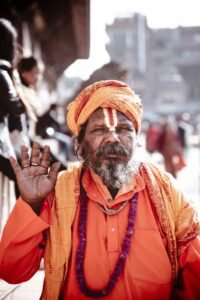
To describe Kashi merely as the city of Shiva would be incomplete; it is also a city of saints, poets, philosophers, and spiritual seekers.
Saint Kabir gave a new direction to Indian spiritual thought through his sharp dohas (couplets) that critiqued social orthodoxies and championed Nirgun (formless) devotion. The Kabir Chaura area and the “Math” (monastery) associated with him keep his legacy alive to this day.
The devotional tradition of Saint Ravidas also shares a deep connection with Varanasi, and Ravidas Ghat is a prominent site associated with his name and memory. Goswami Tulsidas popularized devotion to Lord Ram in the vernacular language. The Tulsi Manas Mandir and Tulsi Ghat continue to showcase the legacy he left behind in Kashi.
Furthermore, Guru Nanak Dev Ji and numerous other saints, spiritual teachers (acharyas), and seekers have had connections with Kashi. The Government of India’s tourism portal also links various saints—including Kabir, Guru Nanak, Ravidas, and Tulsidas—to the spiritual and cultural heritage of Varanasi.
BHU: Where Knowledge and Spirituality Go Hand in Hand
Varanasi is defined by more than just its temples and ghats. Banaras Hindu University (BHU) gives Kashi a global identity as a hub of knowledge, education, research, art, and culture.
BHU’s sprawling campus, the Vishwanath Temple, Bharat Kala Bhavan, and its academic atmosphere demonstrate that in Kashi, spirituality and modern education are not contradictory but are traditions that coexist harmoniously.
This intellectual heritage of Kashi encompasses a long-standing tradition of Sanskrit studies, Indian philosophy, music, art, and literature. The ‘Incredible India’ initiative also highlights Kashi’s rich legacy of saints, scholars, and knowledge, linking it to BHU. This is why Kashi feels simultaneously like a place of pilgrimage, a university town, a cultural capital, and a spiritual laboratory.
Damru Stadium: Mahadev-Inspired Architecture in Modern Kashi
The Varanasi International Cricket Stadium has become a highlight of Varanasi’s new identity. It is popularly known as the ‘Damru Stadium’ because its design incorporates symbolism associated with Lord Shiva and Kashi.
Developed in Ganjari, the stadium’s architecture features elements such as a damru-shaped structure, floodlight towers inspired by the trishul (trident), and a crescent-shaped roof. The proposed design also drew inspiration from the ghats of Kashi for the spectator stands.