
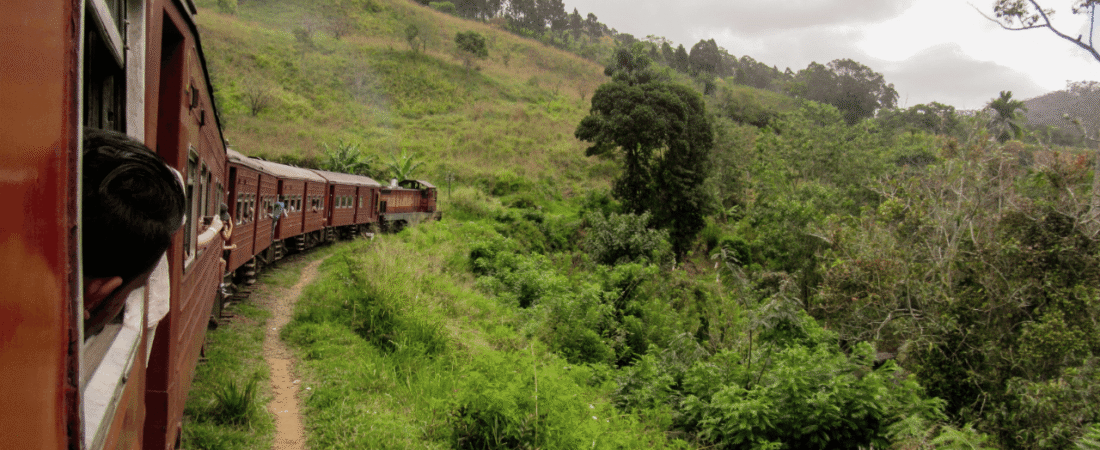
In the month of love, when the cold wind began drawing its curtains over the city, I opened a door into the past- a door the color of old blood, long forgotten by the present, long buried under decades of paint and indifference. I hadn’t meant to open it. I had only meant to take a train.
I had booked a ticket to Amritsar weeks before, the way you book a ticket to somewhere you’ve never quite let yourself visit. As I packed my bag, folding shirts I wouldn’t need and forgetting the ones I would, my phone rang. A voice on the other end, urgent and unfamiliar, said simply, “We need your blood.”
I left everything where it was and ran.
Mohammed Iqbal- a boy of maybe ten, fighting leukemia with a quiet ferocity I will never forget—was out of danger by the time I arrived. The hospital lights were too bright, the way they always are, as if brightness alone could keep death from finding the room. I sat with his mother afterward, and when she refused to eat, I sat there until she did, because grief should never be allowed to starve a person twice. Then I looked at my watch and bolted for the station, my heart somewhere ahead of my legs.
The train pulled away just as I reached the platform. I watched its tail lights shrink into the dark, and I stood there a long moment, breath ragged, chest burning, asking myself a question I still can’t answer: did I leave the train, or did the train leave me? Maybe there’s no difference. Maybe that’s what trains have always done in this part of the world- decided, quietly and without apology, who stays and who goes, who arrives whole and who arrives as only a memory of themselves.
My train, when I finally caught the next one, reached its destination on time. But I couldn’t stop thinking about all the trains that hadn’t- the ones that crossed a border in 1947 carrying families instead of luggage, and arrived on the other side carrying only silence, or worse, carrying nothing at all. I watched the carriage ahead of mine flicker red under the platform lights, and I wondered, with a kind of cold curiosity, whether that color had been chosen on purpose, back then. Did the British paint their trains the exact red of the blood they spilled, so the two would blur together in memory? So that decades later, a person like me, sitting in a window seat with tea going cold in his hand, would no longer be able to tell where the violence ended and the empire’s bureaucracy began?
The train screamed past again on the opposite track, blue this time, the red folded somewhere underneath its paint the way a river folds a drowned thing into itself, hides it, carries it without ever quite releasing it. But I could still smell it- faint, metallic, persistent. Some corners of these trains have never stopped smelling like 1947, no matter how many coats of paint history applies.
My phone rang again. Iqbal had lived. The fever had broken. He would go home in a week.
I took a bus the rest of the way to Amritsar, watching the fields blur green and gold outside the window, trying to let the relief of that phone call settle into my bones before the city asked something else of me.

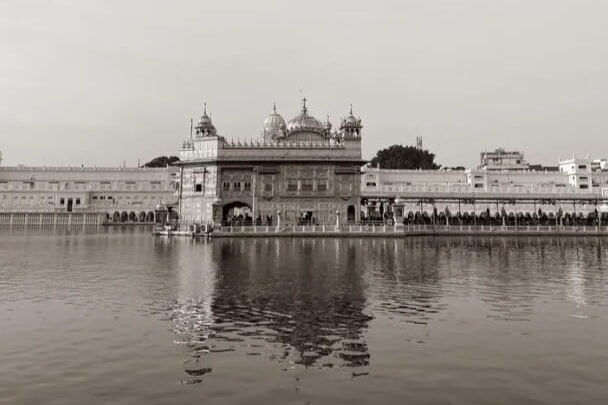
Amritsar received me the way it receives everyone- gently, generously, with the smell of history rising warm off its old stones. The walls have forgotten, mostly, why they’re the color they are. But the redness in them hasn’t forgotten anything. It sits there, patient, under every layer of new paint and new construction, waiting for someone to notice it again.
I stood in the old city a long time, caught somewhere between then and now, unable to fully step into either. The ancient walls watched me back, aloof and grieving, telling their stories to no one in particular, the way the old do when they’ve given up expecting anyone to listen properly. The city itself seemed almost unaware of what it had given up during a migration that tore through it like weather- sudden, total, indifferent to who it left behind.In its houses, I imagined people still speaking with tenderness of grandparents who now live on the other side of a line drawn in a hurry by men who would never have to live with the consequences of their own ruler and pen. The children here have inherited the stories without quite inheriting the grief that built them- they carry the past lightly, almost accidentally, in their pockets, and live, thankfully, somewhere lighter than where their ancestors were forced to stand.
And yet the city is tranquil, impossibly so. The Golden Temple sits at its center like a held breath, a promise the city made to itself a long time ago and has somehow, against every odd, managed to keep. I walked toward Jallianwala Bagh almost without deciding to, the way your feet sometimes know where your heart needs to go before you do. Something in my chest gave way the moment I stood inside those walls. I stood where thousands were shot down by soldiers who called it order and called it necessary, and for a long moment I genuinely could not breathe through the weight of it, the unbearable arithmetic of all those names history never properly counted.

I imagined a boy named Bhagat Singh, twelve years old, standing somewhere near this very ground, watching his family die in front of him and understanding, far too young, what red really meant- not a color, but a verdict.
I speak to all of them now, quietly, the way you speak to people you’ve never met but somehow already know in your blood. The ancestors split apart by a border drawn in a single hurried afternoon. The dead from a massacre history barely has room left to hold, let alone grieve properly. The long years of gunfire during the Khalistan movement, when violence became something the city’s ears simply learned to live with, the way you learn to live with a clock that ticks too loud. The wound of “Operation Blue Star”, still raw beneath the skin of every story told here in low voices. The scars don’t stay quiet for long. They speak, and when they do, they undo me a little more each time.
But here is the thing about this city, the thing I keep returning to: it has been asked to carry more grief than most places ever will, and it still hasn’t stopped believing in love. That, more than the temple, more than the history, is what undid me completely.
I stood there holding all of it at once- the history, the silence, the stubborn survival. I stood with every soul in that city who carries agony and tenderness in the same breath, because there was never any other way to carry it, no version of this place that didn’t ask its people to hold both. I stood with the scars. I stood, too, with the flowers growing determinedly out of all that old red soil, refusing, season after season, to stop blooming.
Red doesn’t only mean blood here anymore. Somewhere along the way, quietly, without anyone announcing it, the city decided the same color could also mean love- that one word didn’t have to cancel the other. But the old fear hasn’t entirely left. You can still feel it, faint and reflexive, every single time a train pulls into a station here, a small flinch the body remembers even when the mind has moved on.
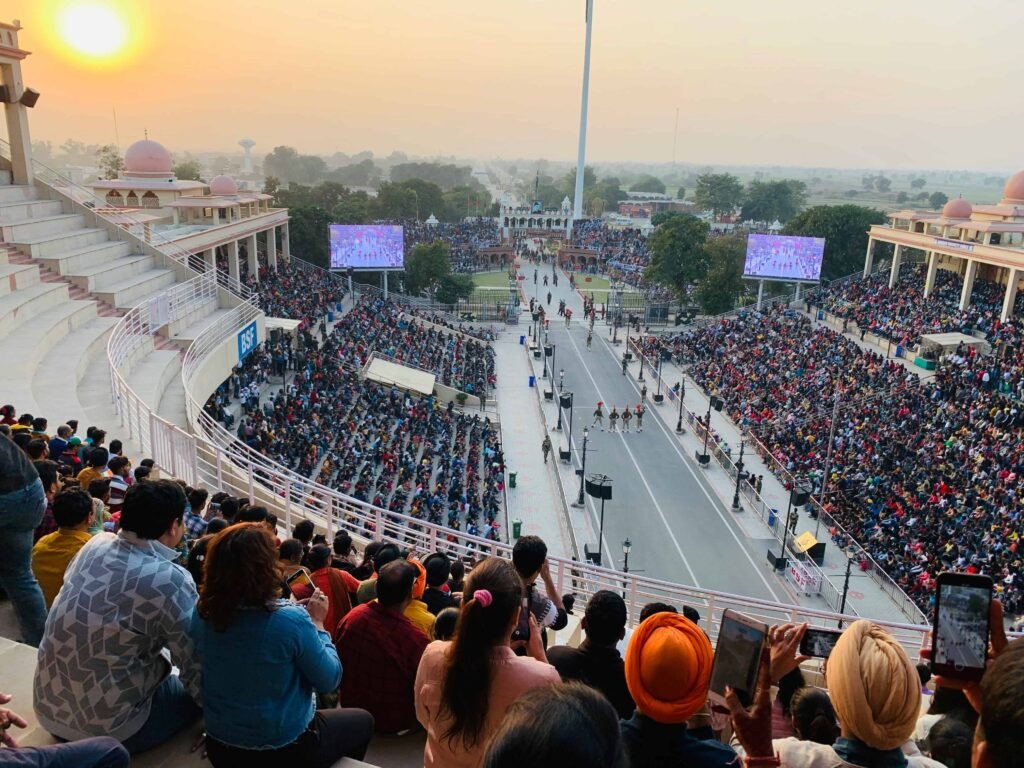
I didn’t go to the Wagah border. I couldn’t make myself perform the present, with its flags and its ceremony, when the past still had so much left unsaid. I let myself stay inside those red pages a little longer.
I took the train home that evening. I fell asleep somewhere in 1947 and woke up in the present, the way you do when a place has that kind of pull on you, when it refuses to let you leave entirely as the person you were when you arrived.
The train stopped at my station. The wheels kept turning anyway, somewhere further down the line, writing some other history now-one I wasn’t there to see, one that belongs to someone else’s window seat, someone else’s red.